Repairs and restoration. Based on articles on the National Churches Trust website.
Did you know that South Shropshire has more churches on the Historic England At Risk Register than anywhere else in England?? Some of these churches are our members.
Actually, it's not as bad as it sounds.
Of our total membership, 8 are on the At Risk register, as needing work to be done. 6 more have recently finished work and are waiting to be officially removed from the register, or are being permanently monitored.
The 8 who need work to be done will be in need of the government's Listed Places of Worship Grants Scheme. Unfortunately, this ran out in March, depriving applicants of a 20% discount on their funding. An alternative scheme is being put in place, but will take a while to get it running and see what are the benefits to hard pressed churches. By the way, it only covers England, not the rest of the UK, whereas the VAT reclamation scheme was nation wide.
Don't despair! Several of our member churches have received grants in the last few years for repairs and restoration and to improve facilities. Examples are:
Successful Grants in the recent past.
St Mary the Virgin, Snead has secured a grant for essential roof repairs following recent storm damage.
St Chad, Prees has been awarded funding for the delicate restoration of its historic 14th-century window, which originally came from Battlefield Church.
St Peter, Melverley has recently received a £12,000 grant from the National Churches Trust and the Wolfson Foundation to tackle damp, repair timber frames, and conserve the ancient wood panelling.
St Mary, Stottesdon has successfully obtained a National Lottery Heritage Fund grant to protect and beautifully display its ancient Norman tympanum.
Active Funding Appeals
All Saints, Culmington has launched a critical Church Tower Appeal. Funds are urgently needed for major capital repairs to strip damaging cement render, repoint the masonry with traditional lime mortar, fix leadwork, and rewire the tower undercroft.
Holy Trinity, Coalbrookdale is running an urgent appeal to save its historic Harrison & Harrison pipe organ. The instrument is currently dismantled while funds are raised to repair and strengthen its collapsing structural housing.
St Peter & Paul, Cleobury North has an active Urgent Repairs Appeal underway to address serious structural issues with the tower and a partial ceiling collapse, as the church currently has no fabric fund
We may be able to help with advice on finding a grant for your church, or at least point you in the right direction. Contact details below in the footer.
LIST OF OUR MEMBER CHURCHES ON THE HISTORIC ENGLAND AT RISK REGISTER.
AT RISK CHURCHES
|
Church
|
Condition
|
Status Update (Jan 2026)
|
Summary of the Register entry. AI aided.
|
|
NORTH
Whittington (St John)
|
Poor
|
Slow decay of masonry and roof. No solution agreed yet.
|
Heritage Status: Listed as "At Risk" (Category C) on the Historic England Register due to slow decay and damp.
Current Situation: Work planned and awaiting funding. The church is currently facing an estimated £200,000 bill for essential repairs.
Key Issues: Major restoration is needed for external masonry over the chancel arch, repairs to rainwater gutters, and the replacement of Victorian parquet flooring which has become a trip hazard.
Fundraising: An active Restoration Appeal is underway. The PCC is currently seeking grants from local and national organizations to bridge the funding gap.
Community Use: Despite the repair needs, the church remains a key tourism asset and an active community hub for the village.
|
|
CENTRAL Wrockwardine
(St Peter)
|
Poor
|
Slow decay; specifically needs high-level masonry repairs.
|
Heritage Status: Grade I listed. Unlike the Abbey, it is not currently on the Historic England "At Risk" Register, but it has a long list of urgent fabric needs.
Restoration Status: Work planned and awaiting funding. A comprehensive "Restoration & Development Project" has been approved in principle by the Diocese (Lichfield), but the church is actively seeking major grants to begin.
Key Fabric Issues: * Masonry: Urgent repair needed for the chancel arch and external stone.
Electrical: Complete rewiring required (the current system is prone to failure during services).
Heating: Replacement of inadequate and costly under-seat electric heaters.
Modernization Plans: Plans include electrifying the historic clock, refurbishing the clock faces, and improving access to the bell-ringing chamber for community use.
Community Status: Open and active. The church is positioning itself as a key village hub, but the start of physical building work is dependent on the success of upcoming grant applications.
|
|
SOUTH
Loughton (St James)
|
Poor
|
High vulnerability; rare 17th-century fabric is decaying.
|
Status: High Risk / Declining.
Heritage: Grade II listed; currently on the Heritage at Risk Register (Category C).
Key Issues: Severe "slow decay" of the building fabric; no solution currently agreed.
Vulnerability: Listed as "High" due to the building's poor condition and lack of an active repair scheme.
Current Situation: Awaiting a formal plan and funding to stop ongoing deterioration.
|
|
Bishops Castle
(St John)
|
Poor
|
NEW ENTRY (Nov 2025). Just added to the register.
|
Heritage Status: Grade II* listed; newly added to the Heritage at Risk Register (2025).
Condition: Listed as "Poor" and "Highly Vulnerable" by Historic England.
Key Issues: Significant roof and fabric decay; urgent structural stabilization required.
Work Completed: Successfully raised £150,000 in 2025 for a new clock face, organ rebuilding, and a replacement window.
Current Situation: Focus has shifted to an urgent major fundraising project for roof and structural repairs now that "At Risk" status is confirmed.
|
|
Cleobury North
(St Peter & Paul)
|
Poor
|
Structural issues with the tower and hammer-beam roof.
|
Status: Urgent Repairs Needed / Temporary Access.
Current Situation: Church is temporarily reopened following inspections, but closure is imminent once building works begin.
Key Issue: Substantial repairs required following a partial ceiling collapse.
Funding: Launched an Urgent Repairs Appeal with no existing fabric reserves; recently awarded a small grant (£4,000) from Shropshire Churches Heritage Trust for plaster ceiling repairs.
Next Steps: Actively fundraising to secure thousands more to enable applications for larger national grants.
|
|
Broseley
(All Saints)
|
Poor
|
NEW ENTRY (Nov 2025). Specifically the tower masonry.
|
Heritage Status: Grade II* listed; newly added to the Heritage at Risk Register (Nov 2025).
Condition: Listed as being in "slow decay" with no solution currently agreed.
Key Issues: Dismantling and rebuilding the bell-cote and the east gable wall is required to make the building structurally sound.
Funding: Estimated cost of structural work is £40,000; current congregation-led fundraising is underway but facing a significant gap.
Current Situation: New heating system recently installed, but major structural work is awaiting funding before further internal modernizations (toilets/kitchen) can proceed.
|
|
Alberbury
(St Michael)
|
Poor
|
PARTLY COMPLETED
High vulnerability; long-term issues with sandstone.
|
Status: Stage 1 Complete; Stage 2 Awaiting Funding.
Heritage: Grade II* listed; currently on the Heritage at Risk Register (Category D—Slow decay).
Work Completed: Stage 1 (Watertightness) finished in late 2025, including roof repairs, new gutters, and masonry repointing to stop water ingress.
Stage 2 Plans: Seeking £60,000+ for internal modernization: installing a toilet, basic kitchen, and updated heating/lighting.
Current Situation: Church remains open as a "daily pilgrimage" site; actively fundraising through concerts and events to transform the building into a viable community venue.
|
|
Jackfield
(St Mary)
|
Fair
|
NEW ENTRY (Nov 2025). Declining due to ground movement.
|
Heritage Status: Grade II listed; newly added to the Heritage at Risk Register (Nov 2025).
Condition: Listed as "Fair" but "Declining" by Historic England.
Key Issues: General fabric deterioration and masonry issues; the building is considered highly vulnerable.
Work Progress: A repair scheme is currently in progress to address the decline.
Community Status: Remains open daily (April–October) and is a popular stop for tourists visiting the nearby Ironbridge Gorge Tile Museum.
|
|
NOT AT RISK
|
|
|
|
|
Clee St Margaret (St Margaret)
|
Poor
|
Not at risk
Slow decay of the historic fabric.
|
Status: Stable / Not at Risk.
Focus: Routine maintenance of rare Saxon/Norman herringbone masonry.
Situation: A "control group" example of a stable, well-maintained building.
|
|
Ditton Priors
(St John)
|
Fair
|
COMPLETED
Not on the Register
Vulnerable; monitored for roof and drainage failures.
|
Status: Stable / Community-Supported.
Heritage: Grade II* listed; not on the Heritage at Risk Register.
Condition: Structurally sound following historical roof and masonry repairs.
Funding: Supported by an independent Church Building Trust (The Friends of St John), which manages a dedicated repair fund separate from the church's daily running costs.
Key Features: Notable for its weather-boarded timber spire and use of local Clee Hill dhustone (basalt), which is notoriously difficult to maintain but currently in good repair.
Current Situation: Focus is on routine maintenance and raising funds for minor internal enhancements.
|
|
Shrewsbury Abbey
|
Poor
|
COMPLETED
Progressive erosion of the 12th-century exterior stonework.
|
Heritage Status: Officially removed from the Heritage at Risk Register after a decade.
Restoration: Completed works on medieval North doors and installed new glass lobbies for heat retention and weather-proofing.
Accessibility: Removed interior trip hazards to provide level access for powered wheelchairs.
Sustainability: Now a major venue with 40+ concerts booked for 2026 (including Tony Christie, George Michael tributes, and opera) to fund daily maintenance.
|
|
Ditton Priors
(St John)
|
Fair
|
COMPLETED
Not on the Register
Vulnerable; monitored for roof and drainage failures.
|
Status: Stable / Community-Supported.
Heritage: Grade II* listed; not on the Heritage at Risk Register.
Condition: Structurally sound following historical roof and masonry repairs.
Funding: Supported by an independent Church Building Trust (The Friends of St John), which manages a dedicated repair fund separate from the church's daily running costs.
Key Features: Notable for its weather-boarded timber spire and use of local Clee Hill dhustone (basalt), which is notoriously difficult to maintain but currently in good repair.
Current Situation: Focus is on routine maintenance and raising funds for minor internal enhancements.
|
|
Munslow
(St Michael)
|
Very Bad
|
COMPLETED
Highest Priority. Immediate risk of further deterioration.
|
Status: Restoration completed.
Heritage: Grade I listed; previously faced a "death knell" due to severe roof failure and falling masonry.
Key Works: Comprehensive re-covering of all roofs with hand-made tiles; structural pinning of the east elevation; tower masonry stabilization.
Drainage: New French and rainwater drains installed to combat water damage.
Current Situation: Building is now secure and weather-tight; widely praised for the "light touch" conservation approach.
|
|
Highley (St Mary) —
|
Success.
|
Removed from register (Oct 2025).
|
|
St Peter's Melverley has recently had a grant approved via the National Churches Trust. More about this in our 'Featured Church' article under the Special Feature menu. HERE
Your church website
Your website is the online shopfront for your church. It can be a brilliant way to keep the community updated, promote events, and attract visitors. But making the most of this tool, and knowing where to focus your efforts, can be tricky. We’ve got some top tips on how to look after your website:
- Make sure your website is easy to find. If people don’t know you have a website, they might not find it. You can let people know about your site at services, but also by including your website address on any printed materials you produce, like leaflets and banners. To reach people further afield, add your website to listing sites – like the National Churches Trust website – and make sure that you update any links if they change.
- Create engaging and accessible pages. Your website needs to capture the attention of readers. This means that any text you use should be written clearly and concisely. Clear sub-headers and line breaks will also help you with this, to ensure that a page isn’t overwhelming to the reader. Good quality photos can also help to bring a page to life.
- Keep a track of what’s working. A website is a bit like a church; regular maintenance can help to prevent bigger problems further down the line. It’s really important to keep your website up to date and to find out what’s working. Tools like Google Analytics measure the performance of individual pages and can help you make small changes to improve the user experience.
Getting ready for winter.
From power cuts to leaking roofs, there are a lot of ways that storms can impact your church. Each year, communities across the UK are devastated by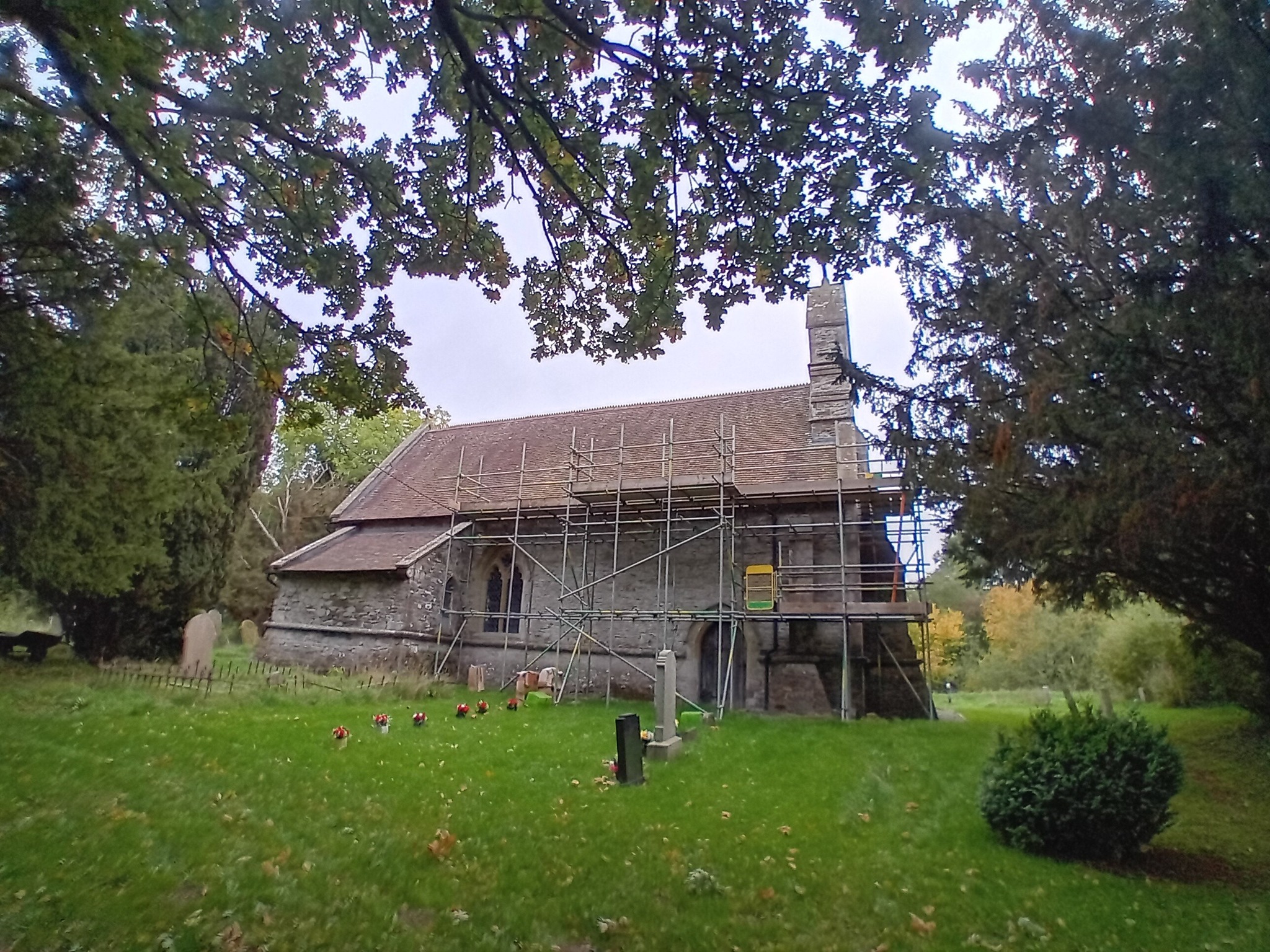 extreme weather events, and during the autumn, storms will become more frequent. While some of the effects are sadly unavoidable, there are some steps you can take to help protect your church in the event of a storm:
-
Regular maintenance – throughout the year, you can keep your building in good shape by performing regular maintenance. Tasks like checking windows will help you spot and fix problems early, while keeping gutters and pipes clear will ensure that they work effectively during a downpour.
-
Secure the building – if you're expecting a storm, secure parts of the building that could be at risk. Outside, you should take down signs, move bins and secure benches, to prevent them from causing damage. Make sure doors are closed and locked and put up temporary boarding behind vulnerable windows.
- Coping with the consequences – even with the right preparation, a storm could damage your church. Once it’s safe, check your building thoroughly for any damage. This could include slipped roof tiles and signs of damp inside. It’s important to document and photograph any damage that you do find, so you can report it to your insurer.
Ecclesiastical Insurance has further guidance on church storm safety here
Article reposted from National Churches Trust website. The picture is of St Mary the Virgin, Snead, which has just completed emergency repairs to its roof, which was damaged in a storm. Thanks go to Hereford Diocese and Shropshire Historic Churches Trust for their grants.